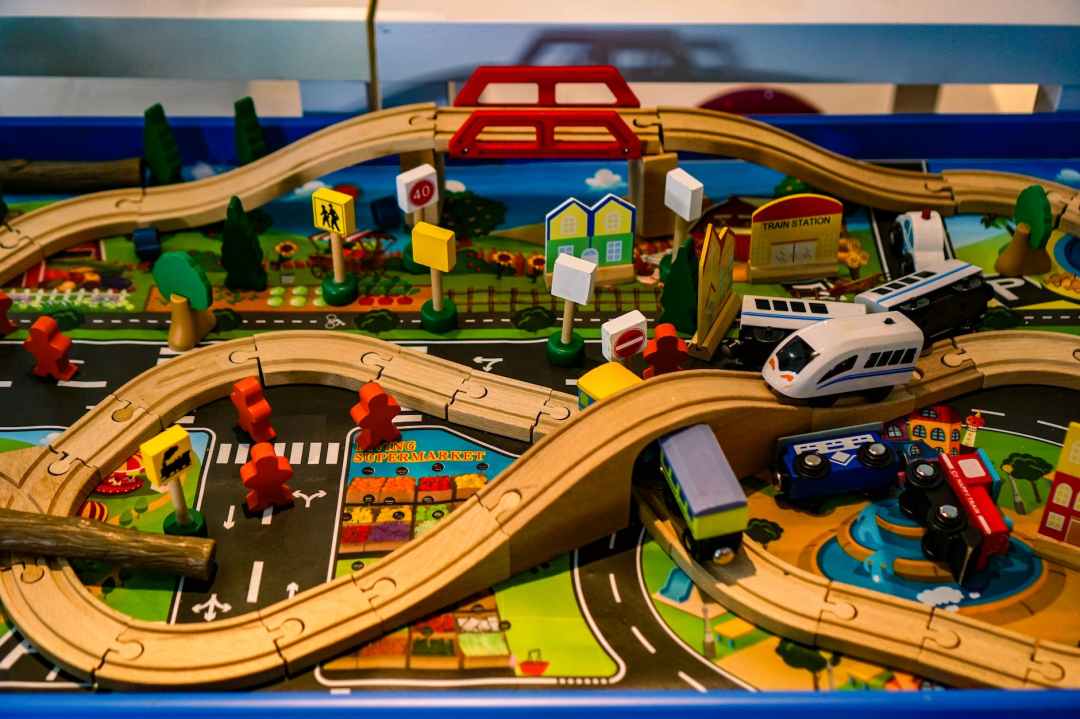
The Indian toy industry is among the fastest-growing globally, projected to reach $ 3 Bn by 2028, growing at a CAGR of 12% between 2022-28. The Indian toy market was valued at US$ 1.5 billion in 2022, and it is expected to reach US$ 3 billion by 2028, rising at a CAGR of 12.2% between 2023 and 2028. Factors driving growth include rising earnings, an increase in the number of children, a growing middle class, and an increased understanding of the role of play in child development. Toy imports to India (HSN Codes 9503, 9504, 9505) have declined from US$ 332.55 million in 2014-15 to US$ 109.72 million in 2021-22, a 67% decrease. Furthermore, exports of Toys (HSN Codes 9503, 9504, 9505) from India have surged from US$ 96.17 million in 2014-15 to US$ 326.63 million in 2021-22, a 240% increase. Domestic market size currently stands at an estimated value of $ 1.5 Bn .
Complimented by sincere efforts of domestic toy manufacturers, the growth of Indian Toy industry has been remarkable in less than 2 years despite Covid-19 pandemic. The import of toys in FY21-22 have reduced by 70% to USD 110 Mn (Rs. 877.8 cr.). There has also been a distinct improvement in quality of toys in domestic market. Simultaneously, the efforts of the industry have led to an export of 326 Mn USD (Rs. 2601.5 cr.) of toys in FY21-22, which is an increase of over 61% over 202 Mn USD (Rs. 1612 cr.) of FY18-19. India’s export of toys registered tremendous growth of 636% in April-August 2022 over the same period in 2013.
STEPS TAKEN BY GOVERNMENT
| Toys (Quality Control) Order, 2020 | Department for Promotion of Industry and Internal Trade (DPIIT) | makes it mandatory for toys for children of 14 years of age or younger to conform to 7 Indian Standards for Safety of Toys (prescribing requirements for physical, chemical and electrical safety of toys) and bear the ISI Mark under a license from BIS. QCO on Toys was amended on 11.12.2020 to exempt goods and articles manufactured and sold by artisans registered with Development Commissioner (M/o Textile) and also by registered proprietor and authorized users of a product registered as Geographical Indication by the Office of Controller General of Patents, Designs and Trademarks (CGPDTM). The said QCO was initially slated to come into effect from 1st September 2020 but was later extended to 1 January 2021[6]. Exceptions: The order is not applicable to goods and articles manufactured and sold by artisans registered with the Office of Development Commissioner (Handicrafts), under the Ministry of Textiles.The order is not applicable to goods and articles manufactured and sold by registered proprietor and authorized user of geographical indication, by the registrar of geographical indications, Ministry of Commerce and Industry.[7] Goods or articles manufactured/meant for export purposes. |
| Scheme of Funds for Re-generation of Traditional Industries (SFURTI) | Ministry of Micro, Small & Medium Enterprises | Under it, assistance is provided for creation of common facilities centre with latest machines, design-centres, raw material bank, skill development etc. As of Feb’ 2023, 19 toy clusters across the country have been approved under the Scheme benefitting 11,749 artisans with an outlay of INR 55.65 Cr. |
| INR 3500 Cr. PLI scheme for toys | expected to incentivise toys made with imported parts. Many toy components such as electronic parts and fabric used in soft toys are not currently manufactured in India. An announcement on the scheme is likely to happen in the upcoming budget meeting for FY24 | |
| INCREASE IN CUSTOMS DUTY | In February 2020, the Basic Customs Duty (BCD) on toys (HS code 9503) was raised from 20% to 60%. | |
| National Action Plan for Toys (NAPT) 2020 | https://pib.gov.in/PressReleaseIframePage.aspx?PRID=1862071 | |
| COMPREHENSIVE HANDICRAFTS CLUSTER DEVELOPMENT SCHEME (CHCDS) | https://texmin.nic.in/sites/default/files/11d_Guidelines_of_development_of_mega_cluster_scheme_Handicrafts_nmcc_cs_20090312.pdf | |
| AMBEDKAR HASTSHILP VIKAS YOJANA [NATIONAL HANDICRAFTS DEVELOPMENT PROGRAMME & COMPREHENSIVE HANDICRAFTS CLUSTER DEVELOPMENT SCHEME] | https://handicrafts.nic.in/schemes.aspx https://handicrafts.nic.in/pdf/Scheme.pdf#page=3 | Ambedkar Hastshilp Vikas Yojana (AHVY), under, NATIONAL HANDICRAFTS DEVELOPMENT PROGRAMME, is a small cluster specific scheme and is the basic unit for targeting the end to end interventions to the artisans. It covers a small geographical area. Under this scheme, Toy Clusters will be preferred for being taken up inthe form of producer companies. |
| Prime Minister’s Employment Generation (PMEGP) | https://msme.gov.in/sites/default/files/Revisedguidelines07.12.2023.pdf | Under Prime Minister’s Employment Generation (PMEGP), margin money assistance upto 35% of the project cost is being provided for setting up of a unit costing upto Rs. 50 lakh for manufacturing sector and Rs. 20 lakh in the service sector. |
| Gramodyog Vikas Yojana | https://www.kvic.gov.in/kvicres/update/How%20to%20Open%20Village%20Industries%20in%20India.pdf | “Rural Engineering and NewTechnology Industry” aims to impart: 1. Skill development training and modern Waste wood/turn wood Craft / Wooden toy related Machines and Tools and product development. 11. Reduce the cost of production and drudgery |
| Micro and Small Enterprises – Cluster Development Programme (MSE-CDP) | https://www.dcmsme.gov.in/schemes/New%20MSE-CDP.pdf | enhance the productivity and competitiveness of Micro and Small Enterprises (MSEs) for their holistic development adopting cluster approach through financial assistance as Government of India (GoI) grant for establishment of Common Facility Centers (CFCs) in the existing clusters and for establishment of new / up-gradation of existing Industrial Areas / Estates / Flatted Factory Complexes. demand driven Central Sector Scheme, wherein, State Government sends proposals for establishment of Common Facility Centers (CFCs) and establishment /up-gradation of Infrastructure Development (ID) projects as per requirements in clusters. FUNDING PATTERN :- PAGE NO. 8 |
TOY INDUSTRY IN KARNATAKA
Karnataka has a legacy for toy making. Channapatna toys of Ramnagara district and Kinhal toys from Koppal district are a particular form of wooden toys native to Karnataka. These traditional crafts are also protected as a geographical indicator (GI) tag under the World Trade Organization. Karnataka is currently the third-largest market for toys in India ($159 Mn) and forms around 9% of the national market. The industry is supported by the mature ecosystem built on robust supply chain networks and skilled manpower.
- KOPPAL TOY CLUSTER : INDIA’S FIRST
The Koppal Toy Cluster (KTC), the first such infrastructure in the country, was established in 2022 by Aequs Infra, a group company.
Promotional Incentives by Govt of Karnataka for Toy Cluster:-
- Capital Investment Subsidy 30% Fixed assets on land, Building & Machinery.
- Reimbursement Registration stamp duty and Registration charges – 100%.
- Interest subsidy on term loan- 5%
- Power Tariff Subsidy – Rs 2 unit for 5 years.
- Electricity duty exemption – 100% for 5 years
- Rental Subsidy- Rs 5 per Sq. Ft per month.
- Wage Subsidy -Rs 1500 per month for 5 years
- Freight subsidy: Year 1 & 2 -75% & Year 3 to 5 -50%
- Skill Development – Rs 12,500 Per candidate.
- Social Security (ESI & PF)- Exemption on Employer contribution 75% for 5 Years
| New Industrial Policy 2020-25 | https://ebiz.karnataka.gov.in/kum/PDFS/Industrial%20Policy%202020-25.pdf | District Industrial ClusterDevelopment Program :- A first of its kind initiative in the country has been taken up under ‘product specific industrial cluster program’ which aims at increasing the production capacities of the industries by creating product-specific manufacturing clusters in the State. Special incentives and concessions areprovided to Toys and Textile clusters. Forother clusters, special incentives andconcessions specific to the respectiveproduct sector will be announced in duecourse of time. |
TOY MANUFACTURING IN MADHYA PRADESH
- MP MSME POLICY – 2021 (https://mpsedc.mp.gov.in/Uploaded%20Document/Policies%20and%20Rules/MP%20MSMED%20Policy%202021%20Booklet%20English.pdf)
It provides for special financial assistance and concessions are provided to eligible manufacturing units in the furniture and toy industry, along with related value chain products. For example,
- Industrial Development Subsidy (4.1): Up to 40% subsidy on fixed assets like plant and machinery, and building. Rules and procedures follow the Madhya Pradesh MSME Incentive Scheme, 2021.
- Interest Subvention (4.2): 2% interest subvention on term loans from banks/financial institutions for the project for a period of 5 years, with a maximum limit of Rs. 100 lakhs per annum.
- Exemption of Electricity Duty (4.3): 100% exemption from electricity duty for the first 5 years from the date of High-Tension power connection for all eligible new units.
- Assistance in Power Tariff (4.4): Rs. 1 per unit assistance for 5 years from the date of commercial production to High-Tension electricity consumers, in addition to any concession provided by the Madhya Pradesh Electricity Regulatory Commission.
- Reimbursement of Stamp Duty and Registration Fee (4.5): 50% reimbursement on registration fee and stamp duty paid on land/bank loan documents for project implementation.
- Incentives on Quality Certification (4.6): 25% cost reimbursement, maximum Rs. 10 lakhs, for obtaining up to 4 quality certificates from recognized institutions.
- Reimbursement of Expenditure on Skill Development and Training (4.7): Permanent residents of Madhya Pradesh can be reimbursed up to Rs. 10,000 per employee for skill enhancement training in the first 3 years of commercial production.
- Employment Generation Subsidy (4.8): New employees appointed within the first three years from the commencement of commercial production are eligible for a monthly assistance of Rs. 5000 per employee. This subsidy is applicable for a maximum of 5 years and up to 200 employees.
TAMIL NADU :-
The Government is implementing the Micro Cluster Development Programme from 2022-23 onwards to set up Common Facility Centres (CFCs) for micro clusters in various sectors across the State.
- Objectives
(i)To support the sustainability and growth of MSEs by addressing common issues such as improvement of technology, skills & quality, market access, etc.
(ii) To build capacity of MSEs for common supportive action through formation of self help groups, consortia, upgradation of associations, etc.
(iii) To create/upgrade infrastructural facilities in the new/existing Industrial Areas/Clusters of MSEs.
(iv) To set up Common Facility Centres (for testing, training, raw material depot, effluent treatment, complementing production processes, etc).
(v) Promotion of green & sustainable manufacturing technology for the clusters so as to enable units switch to sustainable and green production processes and products.
By: Ayush Gupta, Student of Law, NLU-DELHI

 DUCTUS EDGE